
News, Publications
New research links Subcellular transport & Local Protein Synthesis in Neurons to Presynaptic Plasticity & Memory
Nicolas Panayotis (head of SPPIN Team7) has published a new paper in Science Signaling
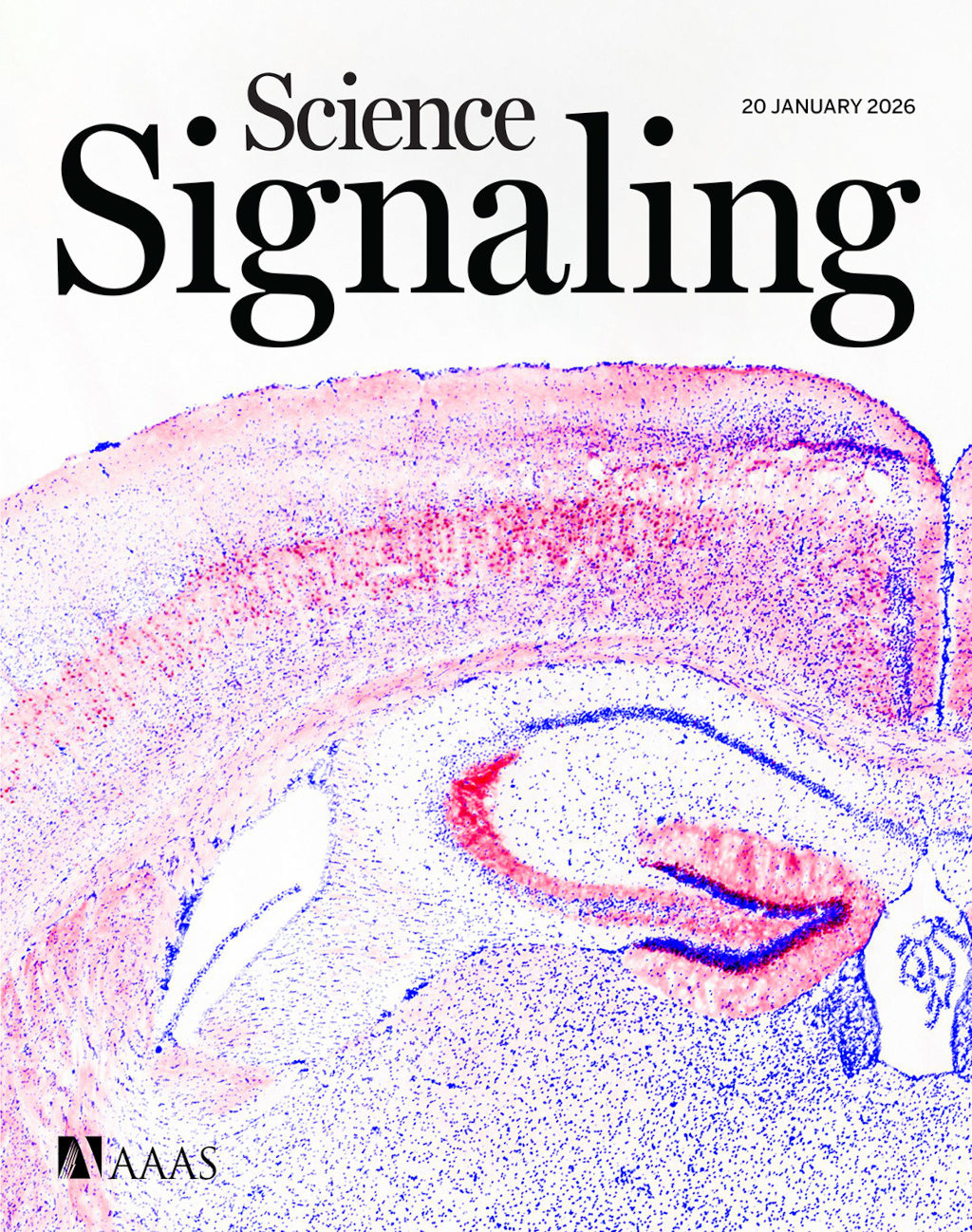
The new study 1 reveals that subcellular localization of Importin β1 plays a crucial role in memory by supporting local translation at neuronal synapses. While Importin β1 is best known for transporting molecules into the nucleus, this work shows it is also essential at CNS presynaptic terminals, far from the cell body.
Using a mouse model in which Importin β1 could no longer properly localize to axons, they found clear impairments in hippocampus-dependent spatial and contextual memory. These deficits were traced to specific synapses in the hippocampus, where a presynaptic form of long-term plasticity (LTP) was disrupted.
At the molecular level, loss of axonal Importin β1 led to changes in synaptic protein composition and reduced local translation of key presynaptic components. As a result, synapses had fewer neurotransmitter vesicles ready for release, weakening communication between neurons.
These findings highlight the importance of local protein synthesis in maintaining synaptic function and memory, and identify Importin β1 as a key player in this process. The study opens new avenues for understanding how neurons regulate communication across long distances in the brain.
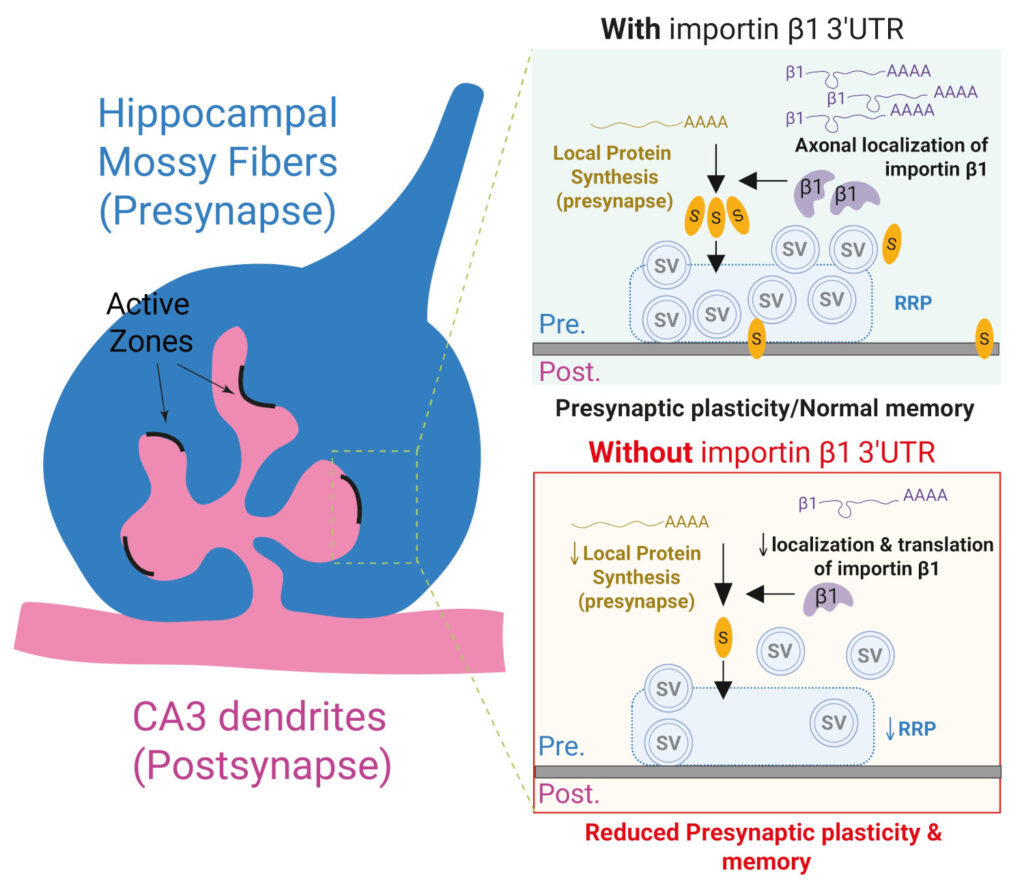
P.A Freund/N. Panayotis. et al.Science Signaling, 2026 (10.1126/scisignal.ady2026)
- Link to the paper: https://www.science.org/doi/10.1126/scisignal.ady2026
- Link to a summary (IN FRENCH) by UPCité: https://u-paris.fr/le-transport-subcellulaire-au-service-de-la-memoire/
- Link to a summary (IN FRENCH) by CNRS Biologie: https://www.insb.cnrs.fr/fr/cnrsinfo/le-transport-subcellulaire-au-service-de-la-memoire
- Thisresearch is the result of long-standing collaborative efforts from the Fainzilber lab (Weizmann Institute of Science, Rehovot, Israel) where Nicolas worked before joining the SPPIN as a group leader in 2023, the Kreutz Lab (Leibniz Institute for Neurobiology, Magdeburg, Germany), the Burlingame lab (UCSF), and the Kawaguchi team (UCLA) in the US. ↩︎